





 Español (España)
  Português (Brasil)
  English (United Kingdom)
 Industrial Automation Equipment
In industrial automation, various types of equipment are used to control, monitor, and optimize production processes. These devices can be classified into different categories based on their function and application. Below is a list of the main types of equipment involved in industrial automation:
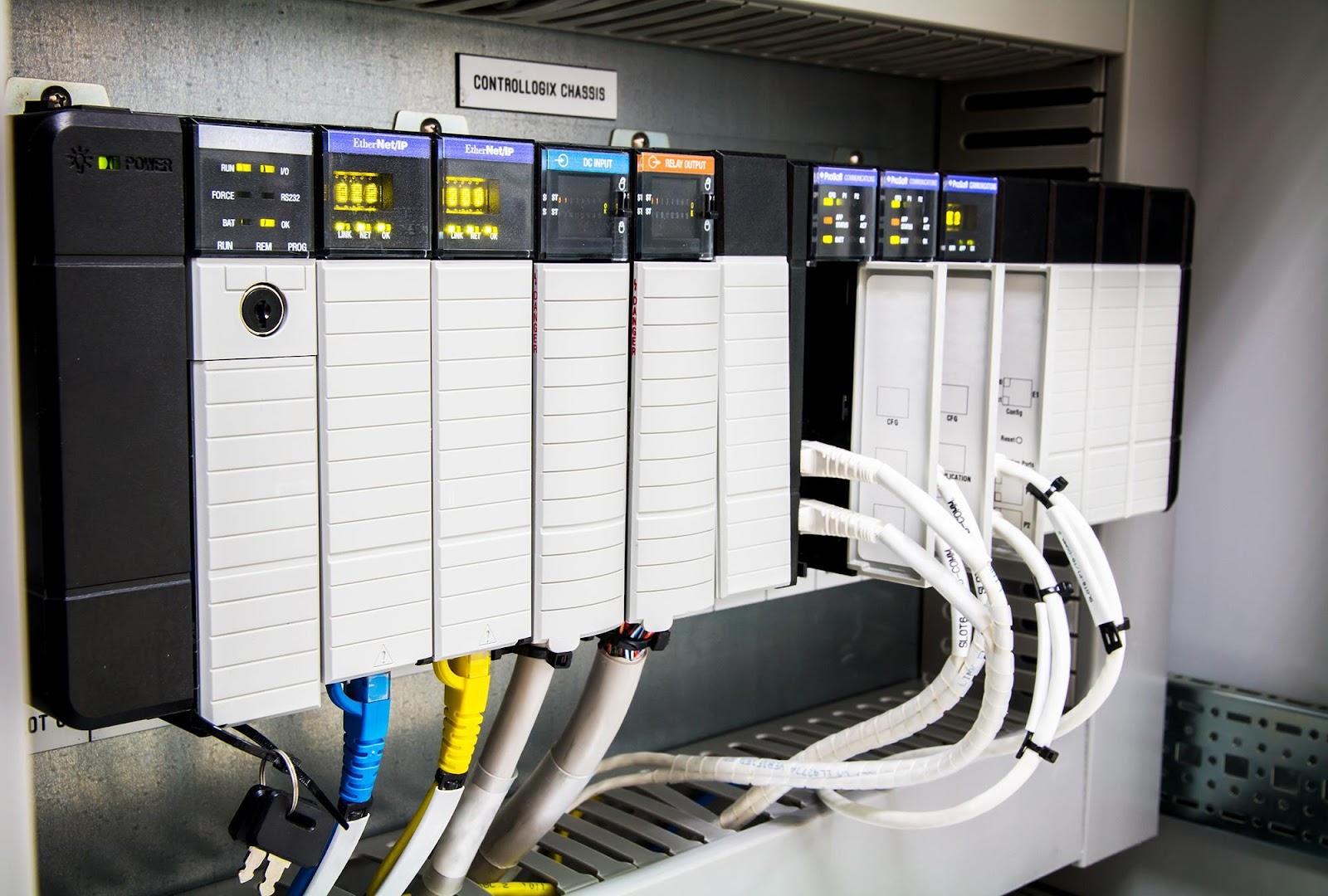
1. Programmable Logic Controllers (PLCs)
Function: The "brain" of automation systems, responsible for controlling machines and industrial processes.
Applications: Conveyor belt control, robots, CNC machines, packaging systems, etc.
Examples: Siemens S7, Allen-Bradley ControlLogix, Schneider Electric Modicon.
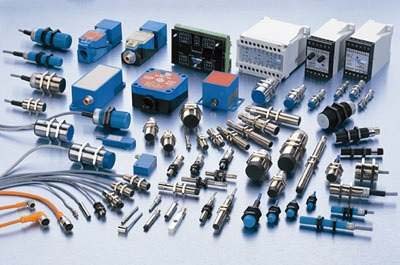
2. Sensors
Function: Capture environmental data, such as temperature, pressure, proximity, and humidity, and send it to the control system.
Common Types:
- Proximity sensors (inductive, capacitive, optical).
- Temperature sensors (thermocouples, RTDs).
- Pressure sensors.
- Level sensors.
- Motion sensors.
Applications: Object detection, variable measurement, safety, etc.
3. Actuators
Function: Convert electrical or pneumatic signals into physical movement to perform actions in the process.
Common Types:
- Electric motors.
- Pneumatic and hydraulic cylinders.
- Solenoid valves.
- Servo motors.
Applications: Conveyor belt movement, valve opening/closing, robot positioning, etc.
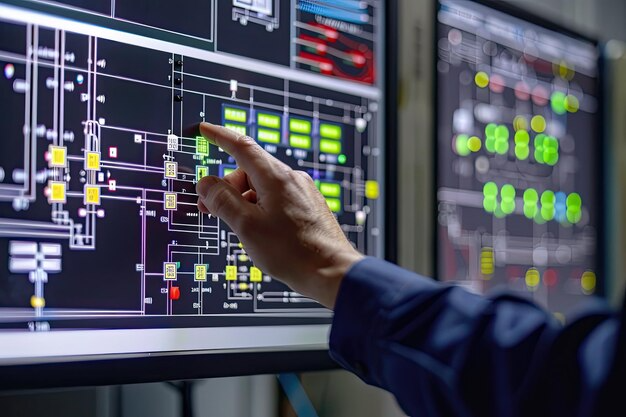
4. Supervisory Control and Data Acquisition Systems (SCADA)
Function: Monitor and control industrial processes in real-time, providing a graphical interface for operators.
Components:
- SCADA software (e.g., WinCC, Ignition, Wonderware).
- Human-Machine Interfaces (HMIs).
Applications: Process monitoring, data collection, report generation, etc.
5. Human-Machine Interfaces (HMIs)
Function: Allow interaction between operators and machines, displaying information and receiving commands.
Types:
- Operation panels.
- Touchscreen displays.
- Graphic displays.
Applications: Machine control, data visualization, parameter adjustment, etc.
6. Industrial Networks
Function: Connect automation devices, allowing communication between them.
Common Protocols:
- Profibus.
- Modbus.
- Ethernet/IP.
- CANopen.
Applications: Integration of PLCs, sensors, actuators, and other devices.
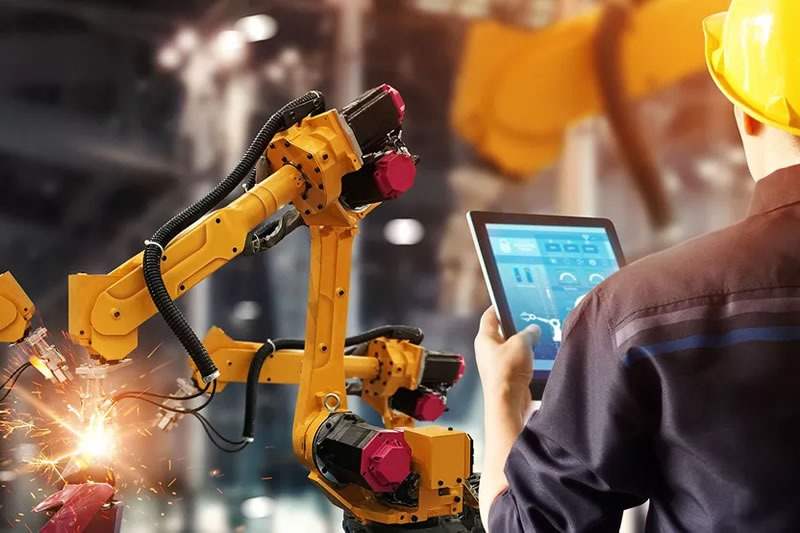
7. Industrial Robots
Function: Perform repetitive or complex tasks with high precision and speed.
Types:
- Articulated robots.
- Cartesian robots.
- SCARA robots.
- Collaborative robots (cobots).
Applications: Welding, painting, assembly, palletizing, etc.
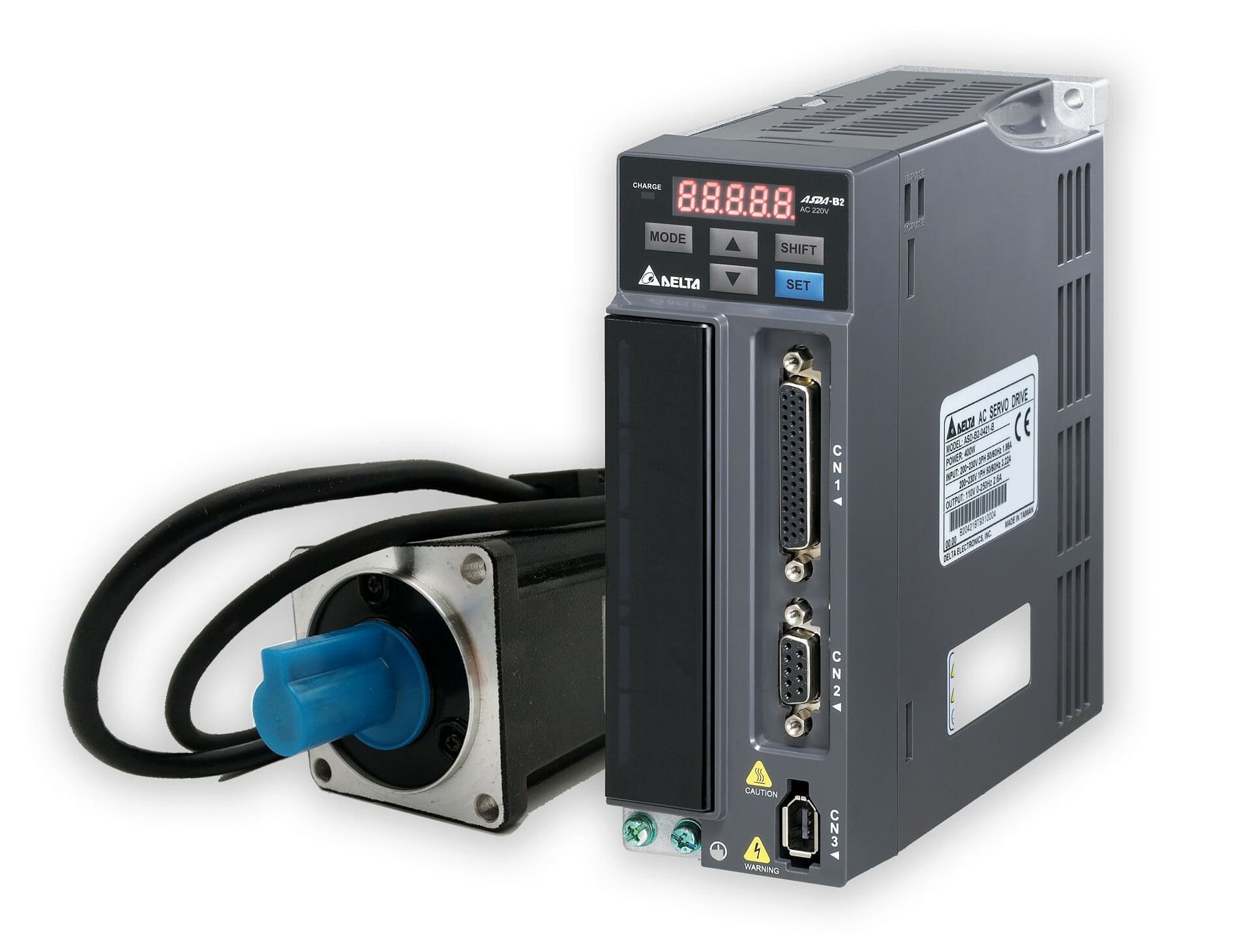
8. Variable Frequency Drives (VFDs)
Function: Control the speed and torque of electric motors.
Applications: Pump, fan, conveyor belt control, etc.
Examples: Siemens, Weg, Danfoss drives.
9. Machine Vision Systems
Function: Capture and process images for inspection, measurement, and quality control.
Components:
- Industrial cameras.
- Image processing software.
Applications: Product inspection, barcode reading, part positioning, etc.
10. Motion Controllers
Function: Control the movement of axes in machines and equipment.
Applications: CNC machines, robots, positioning systems, etc.
11. Safety Systems
Function: Ensure the safety of operators and equipment.
Components:
- Safety relays.
- Safety sensors (light curtains, presence sensors).
- Emergency stop buttons.
Applications: Emergency stops, hazardous area protection, etc.
12. Capacitor Banks and Harmonic Filters
Function: Improve power quality, correct power factor, and reduce harmonics.
Applications: Industrial electrical systems.
13. Storage and Transport Systems
Function: Move and store materials and products.
Examples:
- Conveyor belts.
- Automatic forklifts.
- Automatic storage and retrieval systems (AS/RS).
14. Identification and Tracking Systems
Function: Identify and track products or materials throughout the production process.
Technologies:
- RFID (Radio Frequency Identification).
- Barcodes.
- QR Codes.
Applications: Logistics, inventory control, production tracking.
15. Power and Supply Systems
Function: Provide stable and reliable power to equipment.
Components:
- Power supplies.
- Uninterruptible power supplies (UPS).
- Voltage stabilizers.
16. Industrial Communication Systems
Function: Facilitate data exchange between devices and systems.
Technologies:
- Industrial Ethernet.
- Wireless (industrial Wi-Fi, Bluetooth).
- Fieldbuses (Profibus, DeviceNet).
17. Process Control Systems
Function: Manage continuous processes such as mixing, heating, and cooling.
Examples:
- PID controllers.
- DCS (Distributed Control Systems).
18. Testing and Measurement Equipment
Function: Perform measurements and tests to ensure product quality.
Examples:
- Multimeters.
- Oscilloscopes.
- Vibration analyzers.
Summary
Industrial automation involves a wide variety of equipment that work together to optimize processes, increase efficiency, and ensure quality. Each type of equipment has a specific function, and integration between them is essential for the success of automated systems.